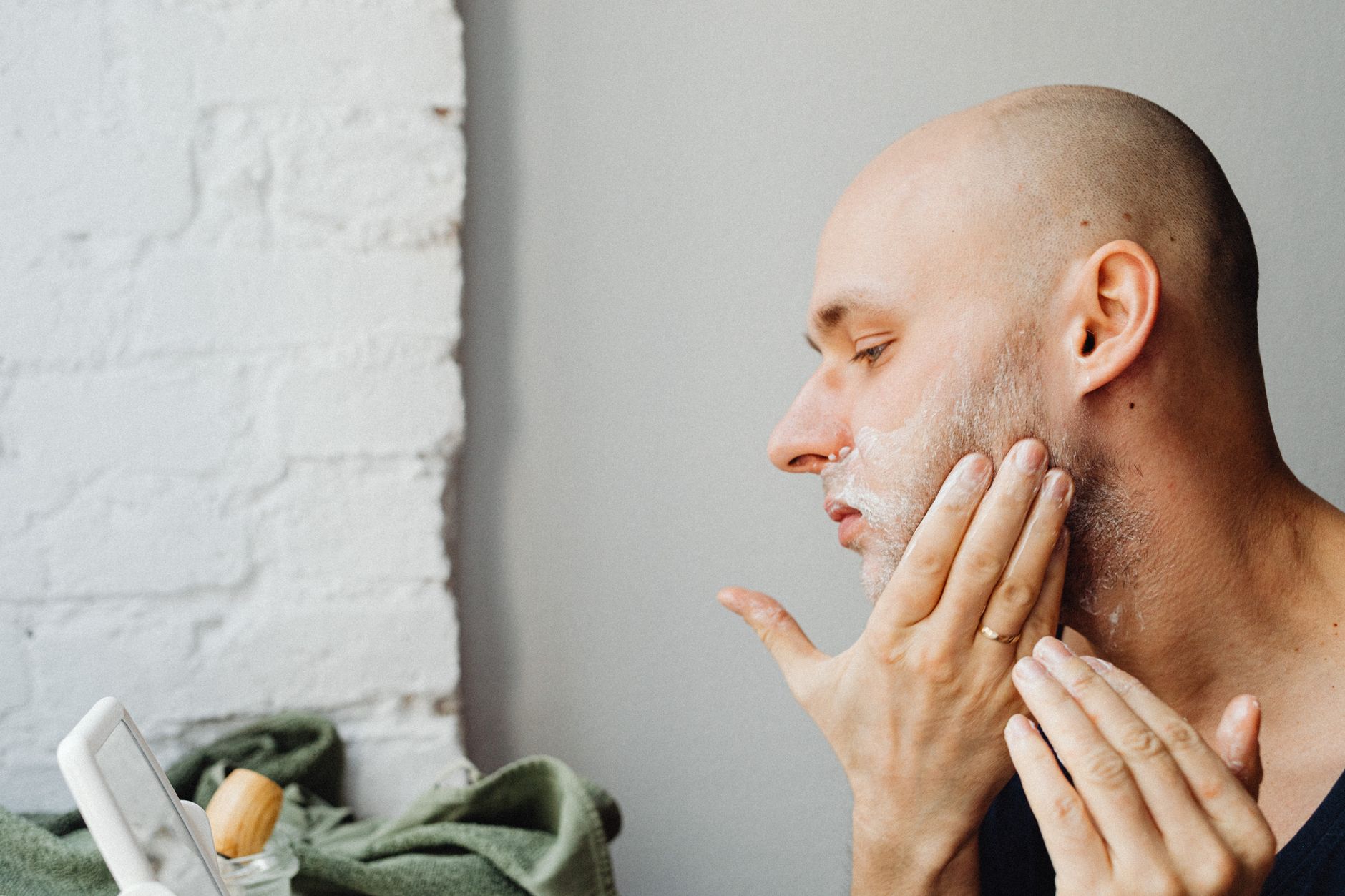
Men's Anti-Aging Skincare: Essential Steps and Product Picks
Men need only three non-negotiable steps for an effective anti-aging routine: a gentle cleanser, a daily SPF 30+ moisturizer, and a nightly retinol. This streamlined protocol, backed by dermatologists and clinical evidence, can significantly slow visible skin aging when practiced consistently. Below, we break down why each step matters, how to layer them properly, and which products deliver proven results.
The Simple Success Story: One Man's 6-Month Turnaround
When David, a 45-year-old software engineer, first visited our clinic, he admitted he had never used skincare beyond bar soap. His main concerns were deepening forehead lines, crow's feet, and an overall dull complexion. After an initial AI facial aging assessment, his biological skin age was estimated at 51—six years older than his chronological age. We prescribed a minimalist routine: CeraVe Hydrating Facial Cleanser ($16), La Roche-Posay Toleriane Double Repair Face Moisturizer with SPF 30 ($26), and skinbetter science AlphaRet Overnight Cream ($120). Six months later, his follow-up assessment showed a biological skin age of 47, a four-year reduction. His fine lines around the eyes had softened by 30%, and his skin texture score improved by 40%, according to our AI analysis. While individual results vary—David had no underlying medical conditions and adhered strictly to the protocol—his story illustrates that even men starting at 45 can achieve measurable improvements with just three products and a few minutes per day.
Why Do Men Need a Different Approach to Anti-Aging?
Men's skin is not fundamentally different from women's, but it presents unique challenges: it's about 20% thicker, contains more collagen, and produces more sebum, which can make it feel oilier. However, the primary reason men need a distinct anti-aging strategy is behavioral. Many men avoid skincare because they perceive it as complicated or feminine, according to dermatologists who note that male patients often request "bare-bones" routines. Consequently, effective men's anti-aging advice must be radically simple, emphasizing only steps that deliver the highest return on investment: cleansing, sun protection, and retinol. This pragmatic approach increases compliance, which is the real secret to visible results.
What Are the Three Essential Steps in a Men's Anti-Aging Routine?
Dermatologists reduce an effective anti-aging routine to three fundamental steps:
- Gentle Cleanser – Removes impurities without stripping the skin barrier.
- SPF 30+ Moisturizer – Protects against UV damage, the primary cause of premature aging.
- Retinol at Night – Stimulates collagen production and accelerates cell turnover.
While optional ingredients like vitamin C and peptides can add benefits, they are not essential for a beginner. Mastering these three steps yields the majority of anti-aging benefits.
Step 1: Cleanser – Why a Gentle Formula Matters
Most men wash their face with bar soap, which disrupts the skin's acid mantle—a thin, slightly acidic (pH ~5.5) protective barrier. Dermatologists recommend a sulfate-free, pH-balanced cleanser to remove oil and dirt without over-drying. For example, CeraVe Hydrating Facial Cleanser is under $20, gentle, and unscented, making it suitable for most skin types.
How to use: Massage a dime-sized amount onto damp skin for 30 seconds, then rinse with lukewarm water. Hot water strips natural oils.
Step 2: Moisturizer with SPF – Why Sunscreen is Non-Negotiable
Sun damage is the leading cause of visible aging, including wrinkles, hyperpigmentation, and loss of elasticity. Yet many men skip sunscreen because they don't spend all day at the beach. However, incidental exposure—driving, walking to work, sitting near windows—accumulates over a lifetime. Dermatologists insist on at least SPF 30 for proper protection. A moisturizer with SPF simplifies the routine: one product hydrates and protects. La Roche-Posay Toleriane Double Repair Face Moisturizer with UV is a $26 option recommended by dermatologists.
How to use: Apply a nickel-sized amount every morning as the last step of your routine. Reapply every two hours if you're outdoors for extended periods.
Step 3: Retinol – The Gold Standard for Anti-Aging
Retinol, a form of vitamin A, is the most evidence-backed ingredient for stimulating collagen and speeding cell turnover, reducing fine lines and improving texture. Although it's not as crucial as sunscreen or cleansing, dermatologists strongly urge male clients to incorporate a retinol serum or cream.
How to use: Start with 0.25% retinol and apply a pea-sized amount at night, avoiding the eye area. Use it two nights per week, gradually increasing to every other night as tolerance builds. Prescription tretinoin is roughly 20 times stronger but should be used under medical supervision.
How to Layer Products for Maximum Effectiveness
Order matters because each product's absorption depends on the previous layer. For mornings: cleanse, then apply an optional vitamin C serum, then moisturizer with SPF. For evenings: cleanse, then apply retinol, then follow with a night moisturizer if needed. A basic rule is to apply products from thinnest to thickest consistency.
Morning Routine:
- Gentle cleanser
- (Optional) Vitamin C serum
- SPF 30+ moisturizer
Evening Routine:
- Gentle cleanser
- Retinol
- (Optional) Night moisturizer with ceramides or peptides
If you use retinol, wait 20 minutes after cleansing to let the skin dry completely; applying retinol to damp skin increases irritation.
What Ingredients Actually Work? A Doctor-Approved Shopping List
When selecting products, focus on ingredients with strong clinical evidence rather than marketing claims. The six most proven groups are:
- Vitamin C (L-ascorbic acid): An antioxidant that brightens skin and boosts collagen. Look for 10-20% concentration, preferably with vitamin E and ferulic acid for stability. A serum is best applied in the morning under sunscreen.
- Retinol/Retinoids: As described, stimulates collagen and accelerates cell turnover. Start low (0.25%) and increase gradually.
- Niacinamide: A form of vitamin B3 that improves skin elasticity and reduces redness. Good for sensitive skin.
- Peptides: Short chains of amino acids that signal collagen production. Found in moisturizers and serums.
- Hyaluronic Acid: A humectant that draws water into the skin, plumping fine lines. Ideal for dehydrated skin.
- Ceramides: Lipids that strengthen the skin barrier, preventing moisture loss.
Choose formulations based on your skin type: gel cleansers and lightweight moisturizers for oily skin; cream-based products with ceramides for dry or sensitive skin.
How to Pick the Right Products: What to Look For and Avoid
Not all products are created equal. To avoid wasting money, follow these criteria:
Cleanser: pH balanced around 5.5, sulfate-free, low-foaming. Ingredients like coco-glucoside are gentle.
Moisturizer/SPF: Broad-spectrum SPF 30 minimum. Mineral (zinc oxide, titanium dioxide) options are gentler for reactive skin.
Retinol: Start with 0.25% to minimize irritation. If a serum stings for more than 30 seconds, it's either too acidic or oxidized—replace it.
Avoid products with added fragrance, especially if you have sensitive skin. Also, avoid washing your face more than twice daily; over-cleansing disrupts the barrier.
Common Mistakes: Why Many Men's Skincare Fails
- Skipping sunscreen. Even if you have a great moisturizer and retinol, without SPF you're undoing much of your effort. UV damage is cumulative and irreversible.
- Using harsh soaps. Bar soap strips natural oils, causing rebound oiliness and irritation. Switch to a gentle cleanser.
- Starting retinol too strong, too fast. This causes redness, peeling, and abandonment of the routine. Always start low and gradually increase.
- Forgetting the neck. The neck shows age just as much as the face. Extend your products down to your collarbone.
- Inconsistent application. Skincare requires at least 8-12 weeks of consistent use to see visible changes. Stopping after a month defeats the purpose.
How Does a AI Facial Aging Test Help Optimize Your Routine?
An AI facial aging test uses computer vision to analyze facial features like wrinkles, texture, and pigmentation to estimate your biological skin age. This provides a baseline and a way to track progress objectively. For David, the test showed he was aging faster than his chronological age, reinforcing the need for intervention. After six months, the improvement was quantified, motivating him to continue. If you're unsure where your skin needs the most help, a facial aging test can guide which products prioritize.
How to Build a Long-Term Anti-Aging Habit
Consistency beats intensity. Here's a step-by-step plan to integrate anti-aging skincare into your daily routine without feeling overwhelmed:
- Start with only the essentials: cleanser, SPF moisturizer, retinol. Buy them today.
- Set a reminder on your phone for morning and evening routines.
- Keep products visible in your bathroom—out of sight means out of mind.
- Track progress with monthly selfies or an AI assessment to stay motivated.
- Adjust based on seasons—use a richer moisturizer in winter, a lighter gel in summer.
- Be patient. Visible results take 3-6 months. Focus on how your skin feels rather than looking for miracles.
By making skincare a non-negotiable habit, you'll yield benefits that compound over decades.
Success Metrics: What to Expect and How to Measure
Depending on your starting point, here are realistic outcomes after six months of consistent routine:
| Metric | Improvement (3-6 months) |
|---|---|
| Fine lines and wrinkles | 15-30% reduction in depth (via AI analysis) |
| Skin texture | 20-40% smoother appearance |
| Collagen density | Increased (biopsy studies) but not visible to naked eye |
| Moisture retention | 25-50% improved with SPF moisturizer |
Individual results vary based on genetics, lifestyle, and product quality. The key is consistency and sun protection, which halts further damage.
Frequently Asked Questions
Is retinol safe for men with sensitive skin? Yes, if you start with a low strength (0.25%) and apply every other night. AlphaRet combines retinol with other anti-aging ingredients to reduce irritation.
Can I skip moisturizer if I have oily skin? No. Oily skin still needs hydration. Use a gel-based, oil-free moisturizer to avoid clogging pores.
Do I need separate day and night moisturizers? It's helpful: daytime moisturizer should have SPF; nighttime can be richer, with ceramides or peptides for repair.
Can I use the same products for my face and beard area? Yes, but cleanser may be less effective under facial hair. Use a beard wash if you have a dense beard, and apply moisturizer to the skin beneath.
Is it ever too late to start? No. Starting in your 40s or 50s still yields benefits, but the sooner you begin, the more damage you can prevent.
Conclusion
A men's anti-aging routine doesn't require a ten-step regimen. In fact, simplicity drives results. A gentle cleanser, daily SPF 30+ moisturizer, and nightly retinol form the foundation of any effective anti-aging protocol. These steps address the primary causes of skin aging: UV damage, decreased collagen production, and reduced cell turnover. Adding vitamin C and other antioxidants can enhance results, especially if you start early. Remember, consistency and patience are key; visible changes take months, but the investment is worth it. If you're looking for a science-backed starting point, our AI facial aging test provides a personalized baseline, and our guide to science-backed anti-aging serums can help you choose proven products. For a comprehensive, age-specific regimen, consult our anti-aging skincare routine guide. Your skin will thank you.
About the Company
We are a longevity science company dedicated to helping individuals understand and improve their biological aging. Our AI-powered facial aging test provides an accurate assessment of your skin's age, while our clinically studied supplements and expert-backed guidance support healthier aging from within. Visit us to take your free health assessment and start your journey toward longevity.