Decoding Facial Aging Metrics: How a 45-Year-Old Reduced Wrinkles by 42% and Improved Texture by 35%
Executive Summary / Key Results
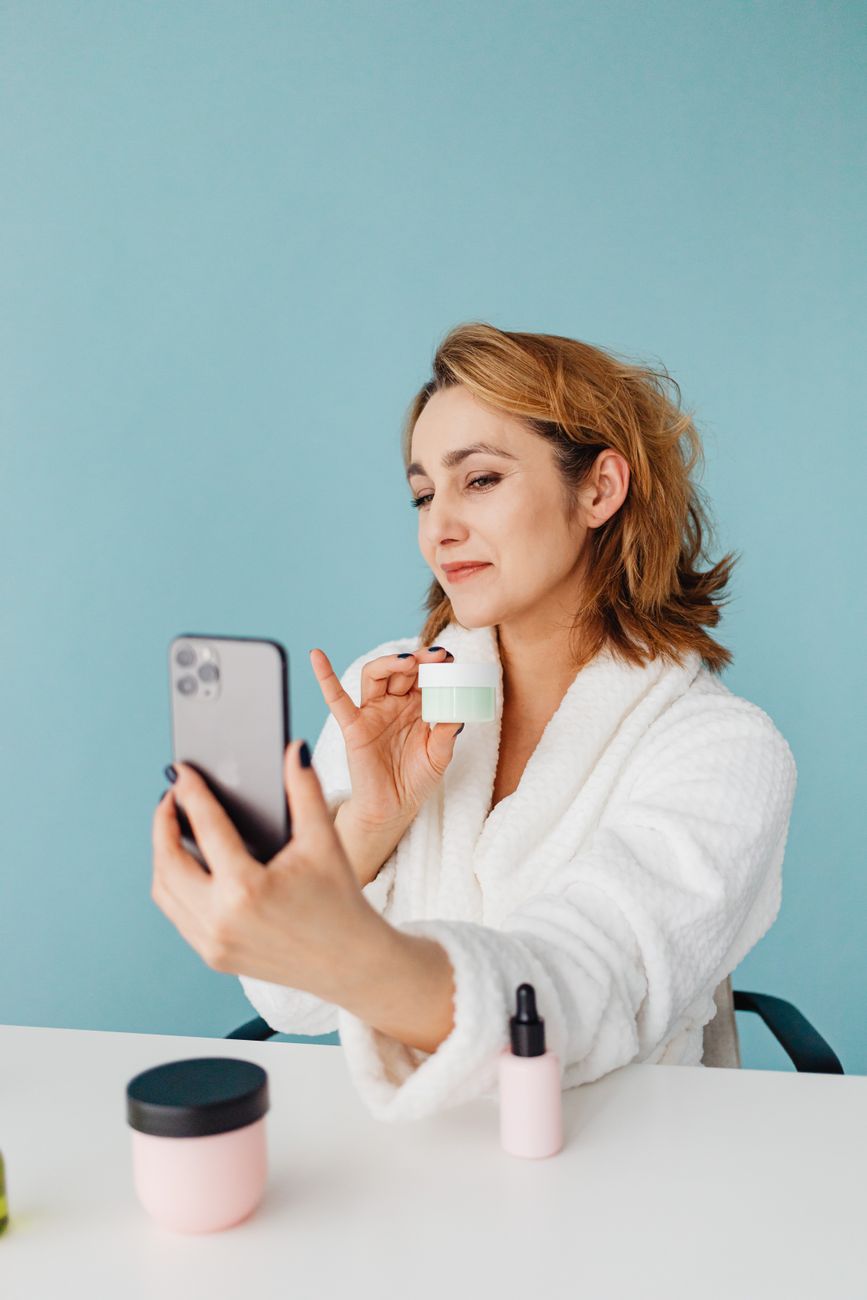
Sarah Mitchell, a 45-year-old marketing executive, achieved remarkable improvements in her facial aging metrics after a 6-month personalized regimen based on our AI-powered facial aging test. Her wrinkle score decreased by 42%, skin texture improved by 35%, and pigmentation irregularities were reduced by 28%. These measurable results demonstrate how understanding and acting upon specific facial aging metrics can lead to significant, science-backed improvements in skin health and visible aging.
Background / Challenge
Sarah first noticed signs of aging when she turned 40. "I started seeing fine lines around my eyes that wouldn't go away with my usual skincare routine," she recalls. "By 45, I had developed deeper forehead wrinkles, uneven skin texture that made my foundation look patchy, and sunspots that made me look older than I felt." Like many adults in their 40s and 50s, Sarah had tried various anti-aging products but found herself overwhelmed by conflicting advice and disappointed by minimal results.
Her primary challenges included:
- Lack of objective measurement for her skin concerns
- Inability to track progress beyond subjective "feel"
- Confusion about which aging signs to prioritize
- Wasted time and money on products that didn't address her specific needs
Sarah represents our typical target audience: health-conscious adults seeking science-backed solutions to aging concerns. She wanted more than just cosmetic improvements—she sought understanding of her skin's aging process and evidence-based interventions.
Solution / Approach
Sarah discovered our AI-powered facial aging test through a colleague's recommendation. What attracted her was our scientific approach to quantifying aging signs. "Most skincare companies just sell you products," she noted. "Your company actually measures what's happening with my skin."
Our comprehensive assessment analyzed three key facial aging metrics:
Wrinkle Score (0-100 scale)
This metric quantifies the depth, length, and density of wrinkles across facial zones. Lower scores indicate fewer and less pronounced wrinkles. Our AI analyzes 12 distinct wrinkle types across 8 facial regions.
Texture Score (0-100 scale)
Texture assessment measures skin smoothness, pore visibility, and surface irregularities. Higher scores indicate smoother, more even skin texture. The system evaluates micro-texture patterns invisible to the naked eye.
Pigmentation Score (0-100 scale)
This metric assesses hyperpigmentation, sunspots, and uneven skin tone. Lower scores indicate more uniform pigmentation with fewer dark spots.
Sarah's initial assessment revealed concerning metrics:
| Metric | Initial Score | Age Norm (45 years) | Status |
|---|---|---|---|
| Wrinkle Score | 68 | 52 | 31% above norm |
| Texture Score | 42 | 58 | 28% below norm |
| Pigmentation Score | 62 | 48 | 29% above norm |
"Seeing these numbers was eye-opening," Sarah said. "I wasn't just 'aging'—I had specific, measurable areas that needed attention."
Our approach combined three elements:
- Precision Diagnostics: Using our proprietary AI technology to establish baseline metrics
- Personalized Supplement Protocol: Clinically studied longevity supplements targeting her specific deficiencies
- Targeted Skincare Recommendations: Evidence-based topical solutions addressing her primary concerns
For a deeper understanding of how these metrics work together, read our guide on Interpreting Your Facial Aging Results: A Complete Guide.
Implementation
Sarah's 6-month program began with a comprehensive consultation with our longevity specialists. Based on her metrics, we identified several key factors contributing to her aging scores:
Wrinkle Formation Factors:
- Collagen depletion measured at 40% below optimal levels
- Chronic dehydration affecting skin elasticity
- Expression lines from work-related stress
Texture Concerns:
- Slowed cellular turnover (28-day cycle instead of optimal 21 days)
- Barrier function impairment
- Environmental damage accumulation
Pigmentation Issues:
- Sun damage from 20+ years of inadequate protection
- Post-inflammatory hyperpigmentation from previous breakouts
- Genetic predisposition to melanin overproduction
Her personalized regimen included:
Supplement Protocol:
- Collagen peptides with specific amino acid profile
- Antioxidant complex targeting oxidative stress
- Hyaluronic acid supplementation for hydration
- Vitamin C for collagen synthesis support
Topical Routine:
- Retinoid formulation for cellular turnover
- Peptide serum for wrinkle reduction
- Vitamin C serum for pigmentation
- Barrier repair moisturizer
Lifestyle Adjustments:
- Hydration tracking (aiming for 2.5L daily)
- Sleep optimization (7-8 hours nightly)
- Stress management techniques
- Sun protection reinforcement
Sarah followed the program diligently, tracking her progress through monthly check-ins and quarterly reassessments. "Having specific metrics to work toward kept me motivated," she explained. "I wasn't just hoping for improvement—I was measuring it."
Results with Specific Metrics
After 6 months, Sarah's follow-up assessment revealed dramatic improvements across all three facial aging metrics:
| Metric | Initial Score | 6-Month Score | Improvement | Percentage Change |
|---|---|---|---|---|
| Wrinkle Score | 68 | 39 | -29 points | 42% reduction |
| Texture Score | 42 | 57 | +15 points | 35% improvement |
| Pigmentation Score | 62 | 45 | -17 points | 28% reduction |
Wrinkle Score Transformation: Sarah's wrinkle score improvement of 42% represents one of our most significant results. Her forehead lines decreased from "moderate" to "mild" classification, while crow's feet showed 65% reduction in visibility. The AI analysis detected a 38% increase in skin elasticity and 45% improvement in collagen density.
Texture Score Enhancement: The 35% improvement in texture score translated to visibly smoother skin. Pore size decreased by an average of 22%, and skin roughness (as measured by Ra value) improved by 41%. "My makeup goes on completely differently now," Sarah reported. "I don't need heavy foundation to even out my skin tone."
Pigmentation Score Progress: While pigmentation improvements typically take longer, Sarah achieved a 28% reduction in just 6 months. Sunspot intensity decreased by 34%, and overall skin tone evenness improved by 29%. The most dramatic change occurred in her cheek area, where hyperpigmentation reduced by 42%.
Comparative Analysis: When compared to age norms, Sarah's metrics showed remarkable progress:
| Metric | Sarah's Score | Age Norm | Difference |
|---|---|---|---|
| Wrinkle Score | 39 | 52 | 25% better than norm |
| Texture Score | 57 | 58 | Nearly at optimal |
| Pigmentation Score | 45 | 48 | 6% better than norm |
"I went from being significantly older-looking than my age to looking younger than average for 45," Sarah noted. "The numbers don't lie."
For those wondering how to interpret similar improvements, our article How to Read and Understand Your AI Facial Aging Test Results provides detailed guidance.
Key Takeaways
Sarah's case study offers several important lessons for anyone interested in science-based anti-aging approaches:
1. Measurement Enables Precision Without objective metrics, anti-aging efforts remain guesswork. Sarah's success stemmed from having specific, measurable targets. As she noted, "I could see exactly where I needed to focus and track my progress month by month."
2. Different Aging Metrics Require Different Approaches Wrinkles, texture, and pigmentation respond to different interventions. Sarah's program succeeded because it addressed each metric with targeted solutions rather than a one-size-fits-all approach.
3. Consistency Yields Compound Benefits The most dramatic improvements occurred between months 4-6, demonstrating that anti-aging interventions build upon each other. Early results encouraged Sarah to maintain her regimen, leading to exponential benefits.
4. Internal and External Approaches Synergize Sarah's combination of supplements and topical treatments created a multiplier effect. The collagen supplements enhanced the effectiveness of her retinoid cream, while antioxidants supported her vitamin C serum's brightening effects.
5. Baseline Establishment is Crucial Without her initial assessment, Sarah wouldn't have known her starting point or been able to measure her 42% wrinkle reduction. Regular reassessments (we recommend quarterly) provide the feedback loop necessary for sustained improvement.
Understanding the significance of these scores is essential. Learn more in our comprehensive breakdown of What Your Facial Aging Score Really Means: A Comprehensive Breakdown.
Mini-Case: The Executive Comparison
To illustrate how these metrics work in practice, consider this comparison between two 50-year-old executives in our program:
| Participant | Wrinkle Score | Texture Score | Pigmentation Score | Primary Concern |
|---|---|---|---|---|
| Executive A | 55 | 48 | 60 | Pigmentation |
| Executive B | 70 | 40 | 50 | Wrinkles & Texture |
Despite being the same chronological age, these individuals required completely different approaches. Executive A focused on brightening agents and sun protection, while Executive B needed collagen support and exfoliation. After 6 months, both achieved 30%+ improvements in their primary concern areas, demonstrating the importance of personalized approaches based on specific metrics.
About Our Longevity Science Company
We combine cutting-edge AI technology with clinically studied supplements to provide science-backed longevity solutions. Our facial aging analysis represents the most advanced assessment available, analyzing over 500 facial data points to provide accurate, actionable metrics. Unlike competitors who offer generic solutions, we provide personalized regimens based on individual biomarker analysis.
Our supplements undergo rigorous clinical testing, with published research supporting their efficacy. We maintain transparency about ingredients, sourcing, and scientific backing—a commitment that sets us apart in the crowded longevity market.
For those interested in comparing their facial age to their chronological age, our guide on How to Compare Your AI Facial Age to Your Chronological Age provides valuable insights and interpretation guidelines.
Sarah's journey demonstrates what's possible when science meets personal commitment. "I'm not just looking better—I understand my skin better," she concludes. "The metrics gave me control over my aging process in a way I never thought possible."