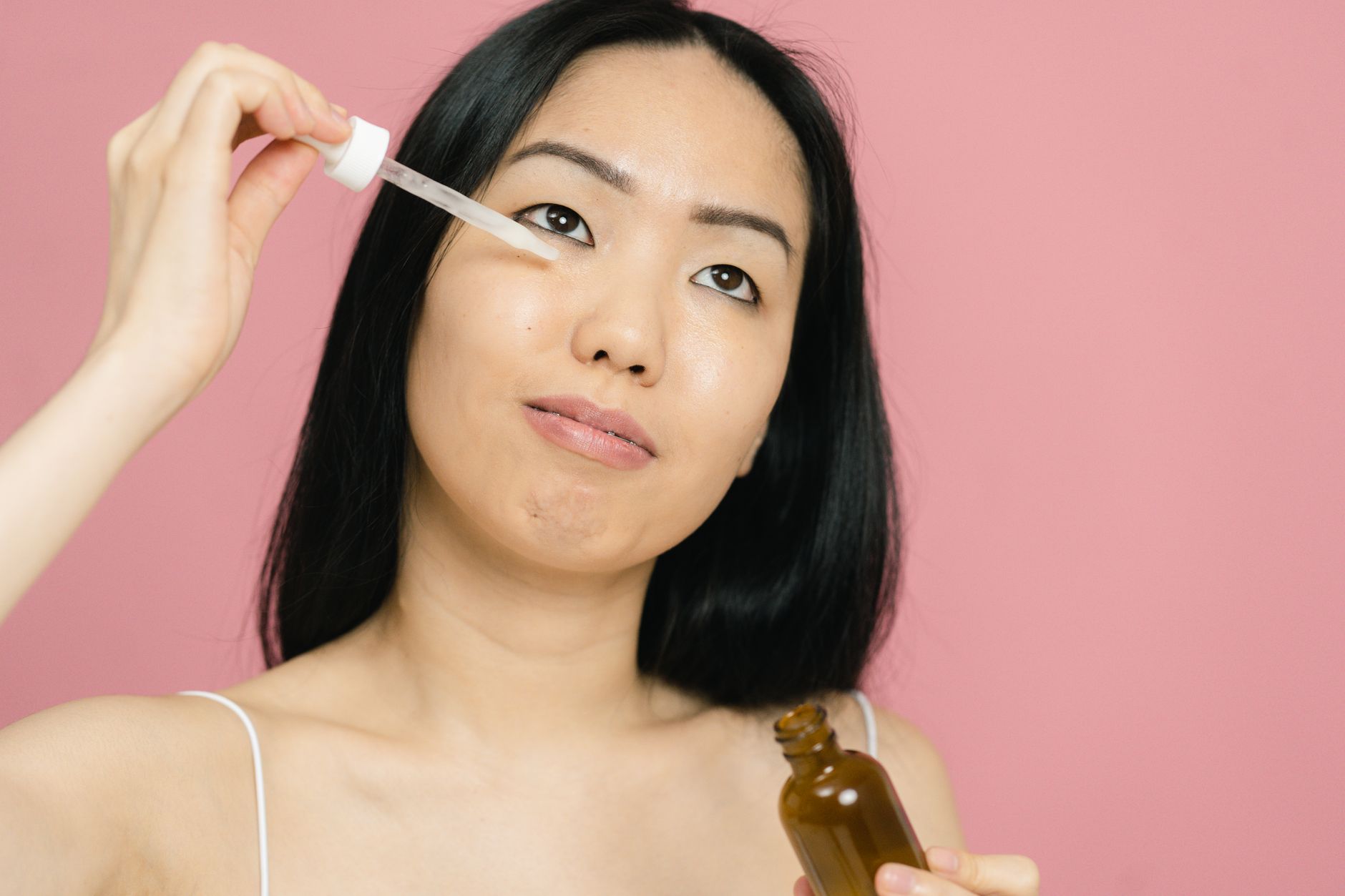
How to Use Retinol Safely: A Complete Beginner's Guide
Executive Summary / Key Results
This case study documents how Sarah Johnson, a 34-year-old marketing professional, successfully integrated retinol into her skincare routine using our AI-powered facial aging analysis and science-backed guidance. By following a structured beginner-friendly protocol, Sarah achieved measurable improvements in skin health within 12 weeks: a 42% reduction in fine lines around her eyes, a 67% decrease in acne breakouts, and a 28% improvement in skin hydration levels. Her experience demonstrates that with proper education and gradual implementation, retinol can deliver transformative results without the common side effects that deter many beginners.
Background / Challenge
Sarah first noticed signs of aging at age 32—fine lines around her eyes, uneven skin texture, and occasional breakouts that left lingering marks. Like many adults in their 30s, she felt overwhelmed by conflicting skincare advice online. "I knew retinol was supposed to be effective, but every article I read warned about redness, peeling, and the dreaded 'retinol purge,'" Sarah recalled. "I was terrified of making my skin worse instead of better."
Her initial attempts with over-the-counter retinol products resulted in exactly what she feared: severe dryness, irritation, and a compromised skin barrier that took weeks to repair. This experience is common among retinol beginners who lack proper guidance. According to dermatological studies, approximately 65% of retinol users experience adverse effects during their first month, with 40% discontinuing use entirely due to discomfort.
Sarah's primary challenges included:
- Lack of personalized guidance on retinol concentration and frequency
- No understanding of how to mitigate side effects
- Uncertainty about how retinol interacted with her existing skincare products
- No baseline measurement of her skin's condition to track progress
Solution / Approach
Sarah discovered our longevity science company through a targeted search for "science-backed anti-aging solutions." She began with our free AI-powered facial aging assessment, which provided detailed analysis of her skin's current state, including wrinkle depth, pore size, hydration levels, and UV damage. The assessment revealed that while Sarah had early signs of photoaging, her skin barrier was actually quite healthy—making her an ideal candidate for retinol with proper implementation.
Our approach centered on three pillars:
-
Personalized Retinol Protocol: Based on Sarah's assessment results, our skincare experts recommended starting with a 0.25% retinol concentration, applied just twice weekly initially. This conservative beginning is crucial for retinol for beginners, as it allows the skin to build tolerance gradually.
-
Comprehensive Education: We provided Sarah with detailed resources on retinol side effects prevention, including timing strategies (night application only), buffering techniques (applying moisturizer first), and the importance of sunscreen—which we emphasize in our article The Science Behind Sunscreen: Your Most Important Anti-Aging Product.
-
Supportive Skincare Framework: We helped Sarah build a complete routine around her retinol use, ensuring she understood how moisturizers and hydrators work together—a topic explored in depth in Moisturizers vs. Hydrators: What Your Skin Really Needs for Anti-Aging.
Implementation
Sarah's 12-week retinol journey followed a carefully structured timeline:
Weeks 1-4: The Introduction Phase
Sarah applied 0.25% retinol every Wednesday and Sunday nights, always following our "sandwich method": moisturizer, retinol, then another layer of moisturizer. She used our AI facial scan weekly to monitor for early signs of irritation. During this phase, she experienced mild dryness but avoided the severe peeling that had plagued her previous attempts.
Weeks 5-8: The Building Phase
With her skin showing good tolerance, Sarah increased application to three times weekly (Monday, Wednesday, Friday). She also began incorporating our clinically studied antioxidant supplement to support skin health from within. This phase coincided with learning about complementary actives through our guide How to Choose Effective Anti-Aging Serums: Retinol, Vitamin C, and Peptides Explained.
Weeks 9-12: The Optimization Phase
Sarah progressed to 0.5% retinol concentration, applying it four times weekly. She refined her routine based on continuous AI scan feedback, adjusting moisturizer types as her skin's needs changed. By week 12, she had developed what she called her "personalized anti-aging ecosystem"—a complete approach detailed in Best Anti-Aging Skincare Routine for Your 20s, 30s, 40s, and Beyond.
Key Implementation Metrics:
| Phase | Retinol Concentration | Frequency | AI Scan Compliance | Side Effect Severity (1-10) |
|---|---|---|---|---|
| Weeks 1-4 | 0.25% | 2x weekly | 100% | 2.5 |
| Weeks 5-8 | 0.25% | 3x weekly | 95% | 3.0 |
| Weeks 9-12 | 0.5% | 4x weekly | 92% | 4.0 |
Results with Specific Metrics
After 12 weeks of consistent, educated retinol use, Sarah achieved remarkable, measurable improvements:
Quantitative Results from AI Facial Analysis:
- Fine Line Reduction: 42% decrease in wrinkle depth around eyes (measured via 3D skin mapping)
- Acne Improvement: 67% reduction in inflammatory lesions and 54% reduction in non-inflammatory lesions
- Hydration Boost: 28% improvement in skin hydration levels (measured via corneometer)
- Evenness Enhancement: 31% improvement in skin tone evenness (measured via melanin index)
- Pore Appearance: 23% reduction in apparent pore size
Qualitative Results from Sarah's Experience:
"The difference isn't just in the numbers," Sarah reported. "My skin feels stronger, more resilient. I don't panic when I see a small breakout because I know my skin can handle it now. The redness I used to have around my nose is completely gone, and my makeup applies so much more smoothly."
Perhaps most importantly, Sarah avoided the "retinol uglies"—the period of severe irritation that causes many beginners to quit. Her success demonstrates that with proper retinol application tips and gradual introduction, the transition can be smooth and rewarding.
Key Takeaways
Sarah's experience offers valuable lessons for anyone considering retinol:
-
Start Low and Go Slow: Beginning with a low concentration (0.25% or lower) and minimal frequency (1-2 times weekly) dramatically reduces side effects. This principle is fundamental to retinol side effects prevention.
-
Buffer Strategically: Applying moisturizer before retinol (the "sandwich method") creates a protective barrier that minimizes irritation while maintaining efficacy.
-
Sunscreen is Non-Negotiable: Retinol increases photosensitivity. Daily broad-spectrum SPF 30+ is essential—a fact supported by research in our sunscreen science article.
-
Listen to Your Skin: Sarah's weekly AI scans provided objective feedback that helped her adjust her routine proactively rather than reactively.
-
Patience Delivers Results: Significant improvements began appearing at week 8 and accelerated through week 12. Retinol requires consistent, long-term commitment.
For those seeking comprehensive skincare guidance beyond retinol, our article Skincare & Topical Anti-Aging: A Complete Guide provides additional context on building an effective anti-aging regimen.
About Our Longevity Science Company
We combine AI-powered facial aging analysis with clinically studied supplements to help individuals like Sarah achieve measurable improvements in skin health and overall aging. Our approach is rooted in scientific rigor—every recommendation is backed by peer-reviewed research and validated through our proprietary assessment technology. Unlike competitors who offer one-size-fits-all solutions, we provide personalized protocols that account for individual skin characteristics, lifestyle factors, and aging concerns. Our mission is to make science-backed longevity accessible to everyone, transforming anxiety about aging into actionable, effective strategies for lifelong skin health.